


Dr. Paula Braitstein was an epidemiologist living and working in Kenya since 2007. The Peer Navigator Project was the culmination of multiple years of research dedicated to supporting street-connected youth’s right to health care. She worked tirelessly as the project lead through her multi-year battle against pancreatic cancer until her passing in October, 2022. She led applied public health research in East Africa centred on improving HIV prevention and treatment, with a focus on orphaned, abandoned, and street-connected children and youth. Dr. Braitstein was a CIHR Chair of Applied Public Health Research and won the 2017 CIHR Institute of Public and Population Health Mid-Career Trail Blazer Award for her work with street-connected and homeless youth in East Africa. In addition to her own research, Paula was Co-Field Director of Research for the Academic Model Providing Access to Healthcare (AMPATH) Consortium in which University of Toronto (Faculty of Medicine and the Dalla Lana School of Public Health) is a partner.

Dr. Ayuku’s research interests have focused on Mental Health and Child Development especially with Street Children and their Developmental Milestones, Nutrition, Health, Sexuality, HIV/AIDS, Post-Traumatic Stress Disorder and Addiction. His activities have included both administrative leadership positions and leading research teams. In addition, he has been involved, as team leader, in development of curricula in the University including; Bachelor and Masters of Science in Medical Psychology and Clinical Psychology for the Department of Behavioural Sciences, School of Medicine, College of Health Sciences.

Dr. Katie MacEntee is a Research Associate at the Dalla Lana School of Public Health at the University of Toronto. Her research focuses on the use of participatory visual methodologies to address HIV and AIDS and gender-based violence and for the study of sexual and reproductive health. She has extensive experience facilitating digital storytelling, photovoice, drawing, collage, and cellphilm method with Indigenous, rural and urban communities in Canada, South Africa, Ethiopia, India, Sierra Leon, and Mozambique. Katie is a leader in the development of cellphilm method. In 2023, she published her second book, Cellphilm as a Participatory Visual Method (Routledge).

Dr. Abe Oudshoorn is an Assistant Professor in the Arthur Labatt Family School of Nursing at Western University and an Associate Scientist with Lawson Health Research Institute. Having worked as a nurse with people experiencing homelessness, Abe’s research focuses on health equity through housing stability. This includes concepts such as gender, trauma, policy and poverty, and particular focus on women, refugees, and people experiencing mental health concerns. Abe is past Chair of the London Homeless Coalition, a Canada 150 medal recipient, and remains a tireless advocate for those experiencing housing loss in the London area.
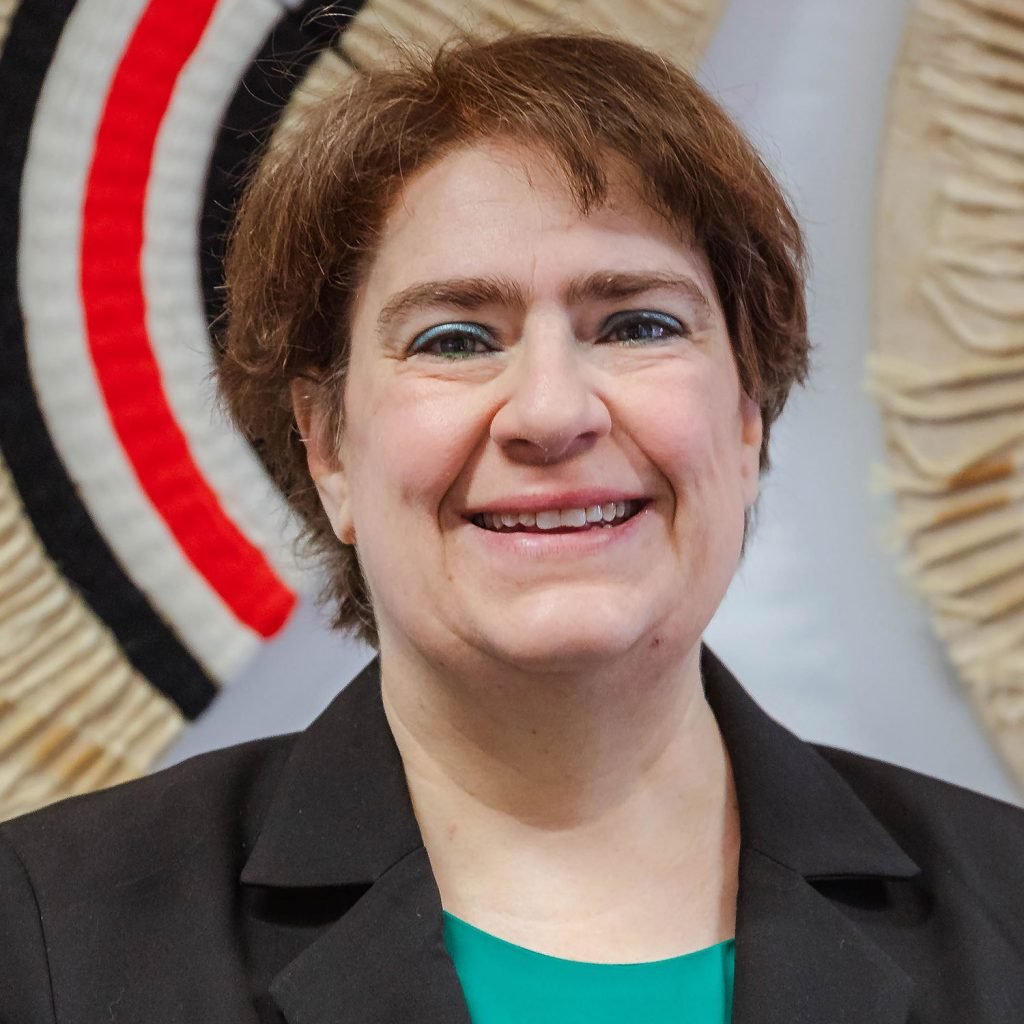
Dr. Adi Ferrara is a Postdoctoral Research Fellow at the Stigma and Resilience Among Vulnerable Youth Centre at the University of British Columbia’s School of Nursing. Her research interests focus on health equity and HIV prevention, particularly among 2SLGBTQ+ youth. She earned her PhD in Health Sciences from the University of Canterbury in Christchurch, New Zealand. Her thesis examined perceived facilitators and barriers to healthcare access in LGBTQ+ youth in Aotearoa New Zealand, and whether they influenced sexual risk behaviours in the study population. As a PhD candidate, Adi served on the University’s Human Research Ethics Committee as the Postgraduate Student Representative, combining her passions for ethics and research. Prior to her PhD studies, Adi worked for the HIV Vaccine Trials Network at the Fred Hutchinson Cancer Research Center in Seattle, Washington (USA), and Seattle Genetics, a pharmaceutical company that specialized in ADC drug therapy.

Dr. Edith Apondi is a pediatrician at Moi Teaching and referral hospital (MTRH), a consultant for Academic Model Providing Access to Healthcare (AMPATH) and an honorary lecturer with Moi University. She has been involved in various HIV care studies around child and adolescent health. Edith is the Kenyan secretary of the AMPATH pediatric research working group and a member of the Kenya National HIV/AIDS pediatric and adolescent technical working group.

Dr. Juddy Wachira is a lecturer at the Department of Behavioral Science in Moi University; currently she’s the social behavioral lead for the Academic Model Providing Access to Healthcare (AMPATH). Her research interests are centered on applying mixed methods to explore and promote positive care seeking behaviors among patients with chronic diseases including HIV in Kenya. This interest has expanded over the years to include sexual health of children and adolescents with the goal of promoting adolescent friendly services in Kenya.

PhD, Managing Director of SARAVYC
Dr. Monica Rana holds a Ph.D. and Masters in Public Health. She has experience in the field of youth mental health. For her Ph.D. thesis, she worked with youth and their families to understand bullying and its mental health effects and to conduct interventions to reduce bullying perpetration. In addition, she also has experience working with marginalized youth and sexual and gender minority populations. As a South Asian herself, she is also working with ethnic minority youth to understand health disparities among South Asian youth. In her role as a postdoctoral teaching fellow, she is teaching the Health Impacts of Climate Change course. For her future research, she specifically would like to focus on the health disparities among sexual/gender minority youth and across specific ethnocultural groups that experience racism and the role of intersectionality.

Dr. Alex Abramovich, PhD, is a Senior Scientist at the Institute for Mental Health Policy Research, Centre for Addiction and Mental Health (CAMH) and an Associate Professor at the Dalla Lana School of Public Health, University of Toronto. Dr. Abramovich holds a Canada Research Chair in 2SLGBTQ+ Youth Homelessness and Mental Health. He has led research on 2SLGBTQ+ youth homelessness for over 15 years and is an award-winning, internationally recognized scholar in 2SLGBTQ+ health and homelessness. His research program examines health and social inequities affecting 2SLGBTQ+ youth and young adults, with a strong focus on improving services and outcomes. This work has driven significant practice and policy change, including the creation of Canada’s first dedicated transitional housing program for 2SLGBTQ+ youth, and has informed policy development across multiple levels of government through close collaboration with community and public-sector partners.

Edward Ou Jin Lee is an assistant professor at the School of Social Work at the Université de Montréal. Edward’s research and practice interests are within the realms of a) critical, decolonzing and anti-oppressive social work, b) critical, participatory and digital media research methodologies and c) social policy advocacy & community organizing with Queer, Trans, Black, Indigenous and other People of Color (QTBIPOC) communities and in particular queer and trans migrants with precarious status. Edward recently completed a SSHRC funded scoping review that assessed the state of knowledge about LGBTQ migrants living in Canada in relation to an emerging global LGBTQ rights agenda. Edward is also involved in a number of community-based initiatives in Montreal.

Sue-Ann MacDonald is an Associate Professor in the School of Social Work at the Université de Montréal and a researcher at CREMIS (Centre de recherche de Montréal sur les inégalités sociales et les discriminations), where she is co-responsible for developing and facilitating knowledge mobilization activities related to homelessness. She worked for more than a decade as a social worker on a mental health outreach team with people experiencing homelessness in Ottawa, primarily working with youth. Her research lens focuses on marginalized people’s understandings and their experiences of oppression. She is concerned by the various tensions embedded in discourses and practices (social, health and judicial) affecting the lives of marginalized people. Sue-Ann explores the intersecting forms of oppression in various contexts, in mental health courts, and various forms of hidden homelessness, including rural experiences, women, youth, trans and noncisgender youth’s experiences, as well as people that attempt to access health and social service programs and the professionals that dispense services to the homeless.

Amy Van Berkum is an Advanced Practice Nurse who has worked in a variety of contexts including academia, research, professional practice, and acute and community care. Her time spent working as a nurse alongside marginalized populations motivated her to further explore trauma, homelessness, health equity, primary prevention, and the social determinants of health throughout her Master’s in Nursing. Amy has continued to pursuit similar research interests within the London, ON. community alongside Dr. Oudshoorn and is keen to be participating in the Peer Navigator Project as a Research Assistant.

Olli Saarela is an Assistant Professor at the Biostatistics Division of the Dalla Lana School of Public Health, University of Toronto. He studied statistics at the University of Helsinki, obtaining his Master of Social Sciences degree in 2004 and PhD in 2010; during his PhD studies he also worked as a statistician at the National Institute for Health and Welfare of Finland. He came to Canada for a postdoctoral fellowship at the Department of Epidemiology, Biostatistics and Occupational Health of McGill University, before joining University of Toronto as faculty in Summer 2014. Olli has long experience in collaborative statistical work, and his methodological research is often motivated by the collaborations. His background is in causal inference and survival and event history analysis; recently he has been interested in particular in adapting causal inference methods to answering questions in health services research, as well as using causal models in planning and analysis of randomized trials for subgroup effects.

Reuben Kiptui is a research coordinator at the Academic Model Providing Access to healthcare (AMPATH). He holds a bachelor’s degree in biomedical sciences and currently a Master’s of Science candidate in International Health research ethics and management in the behavioral science department, college of health sciences in Moi University. He has interests in research ethics, qualitative research and monitoring and evaluation. He has worked in various research studies that revolve around key population and street connected youth.

PhD, RN, FSAHM, FCAHS, FAAN, FCAN
Dr. Elizabeth Saewyc is a Professor, Distinguished University Scholar, and Director of the School of Nursing at the University of British Columbia in Vancouver, Canada. She also leads the multidisciplinary Stigma and Resilience Among Vulnerable Youth Centre at UBC. For over 25 years, her research has focused on how stigma, discrimination, violence, and trauma influence adolescents’ health and coping behaviours, and what environments, relationships, policies, and interventions can help foster resilience and improve health equity for young people, especially those who are marginalized, including 2SLGBTQ+ and Indigenous youth.

Dorothy Apediale is a PhD student in epidemiology at the Dalla Lana School of Public Health at the University of Toronto. She holds a BSc in mathematics from McGill University and a MPH in epidemiology from the University of Toronto. Her research focusses on housing precarity and HIV-related vulnerability among marginalized populations in Kenya, Canada, and Peru.